Packing: General Suggestions
Plan carefully what to bring, keeping in mind that you will have to carry all of your luggage on your own while traveling. This means pack light. We cannot emphasize this strongly enough. Choose each item carefully and avoid duplication. Consider what you will use for luggage and avoid using extra-large or over-sized bags. As you pack, also keep in mind that you will be carrying this luggage by yourself, sometimes over great distances or on crowded public transportation. Take things that are easy to manage and again, avoid over-packing. One rule of thumb is to pack your bags and walk around the block with them three times; then re-pack.
Remember to also check whether luggage accompanying you is limited by weight or by physical dimensions. In view of frequently-changing airline regulations, it is essential that you find out from your airline which items may be transported in checked baggage, and which may or must be hand-carried. Do not pack lots of books in your luggage. You can buy them in Argentina or Uruguay and ship them home after the term ends. We suggest that you insure your luggage.
Please make sure you are bringing everything you may need, and especially those things that are not available in your host country (e.g., specific medicines, favorite toiletries, etc.). The local mail service is often unreliable and customs regulations are strict, which may mean that you’ll need to spend a lot of time and money to retrieve your items if they are mailed to you. As a general rule, we advise students not to have anything sent by mail while they are abroad, including care packages.
Bed and Bath Linens
We do not recommend that you bring sheets, blankets, or pillows* with you. They are too heavy and take up too much space in your luggage. These items are also costly to ship in advance and can be easily purchased once you arrive in Argentina or Uruguay . If you are going to be living with a host family, sheets, towels, and blankets will be provided. You may want to consider bringing one hand towel and one bath towel with you, which should suffice until you determine whether you will need to purchase more.
*All of this being said, some students do have a strong preference for using their own pillow. In this case, do make space in your suitcase to bring it with you as having it shipped from home and trying to retrieve it at customs at a later date can be difficult and expensive.
Climate and Clothing
The seasons in Argentina and Uruguay are the opposite of those in the northern hemisphere. Winter stretches from June to August, and summer runs from December to March. Generally, residences and classrooms are not heated to the same extent as in the U.S. (the average temperature indoors typically ranges between 50° and 60° Fahrenheit). 
Argentinian and Uruguayan students dress very similarly to their U.S. counterparts. Layered dressing for spring (September-November) and autumn (April-May) is recommended since temperatures fluctuate throughout the day. During winter (June-August), central heating may not be adequate, so your clothing should include wool sweaters and rain gear (rain coat, umbrella, rain boots), especially in the city. It is also strongly recommended to bring warm pajamas since many apartments and homes do not have central heating. If you venture to the interior, the mountains, or to Patagonia in the winter, be sure to have heavier clothing. Dress tends to be a bit more casual during the summer months (December-March). Light clothing, preferably cotton, is necessary. Students should note that classrooms may not be air conditioned and should plan to dress accordingly when going to class.
Computers
If you enter Argentina or Uruguay with a computer, you may be asked to sign a paper upon entry and register it, or to report the the computer’s license number, so be sure to note that ahead of time. If asked to register, you must show the computer upon leaving the country, even if you are just going to visit a neighboring country. This is important to be aware of as it could be a headache.
You will be able to enter the country with your personal “used” computer. A customs official may ask you to show your passport, proof of your intention to use it for study purposes, and to take it with you when you return home. It is possible that customs will require you to leave a monetary deposit to guarantee that the laptop will leave the country with you at the end of your stay.
If you are considering bringing a computer with you to Argentina or Uruguay, look on the external power supply or consult your retailer to determine whether it has dual voltage (110/220 with an internal transformer). If not, you will need an electrical transformer to bring down the voltages from 220 to what the computer normally uses. Most, if not all, new models are equipped with self-setting transformers. Be sure to have back-ups for any media you take abroad, and to backup your files frequently while there.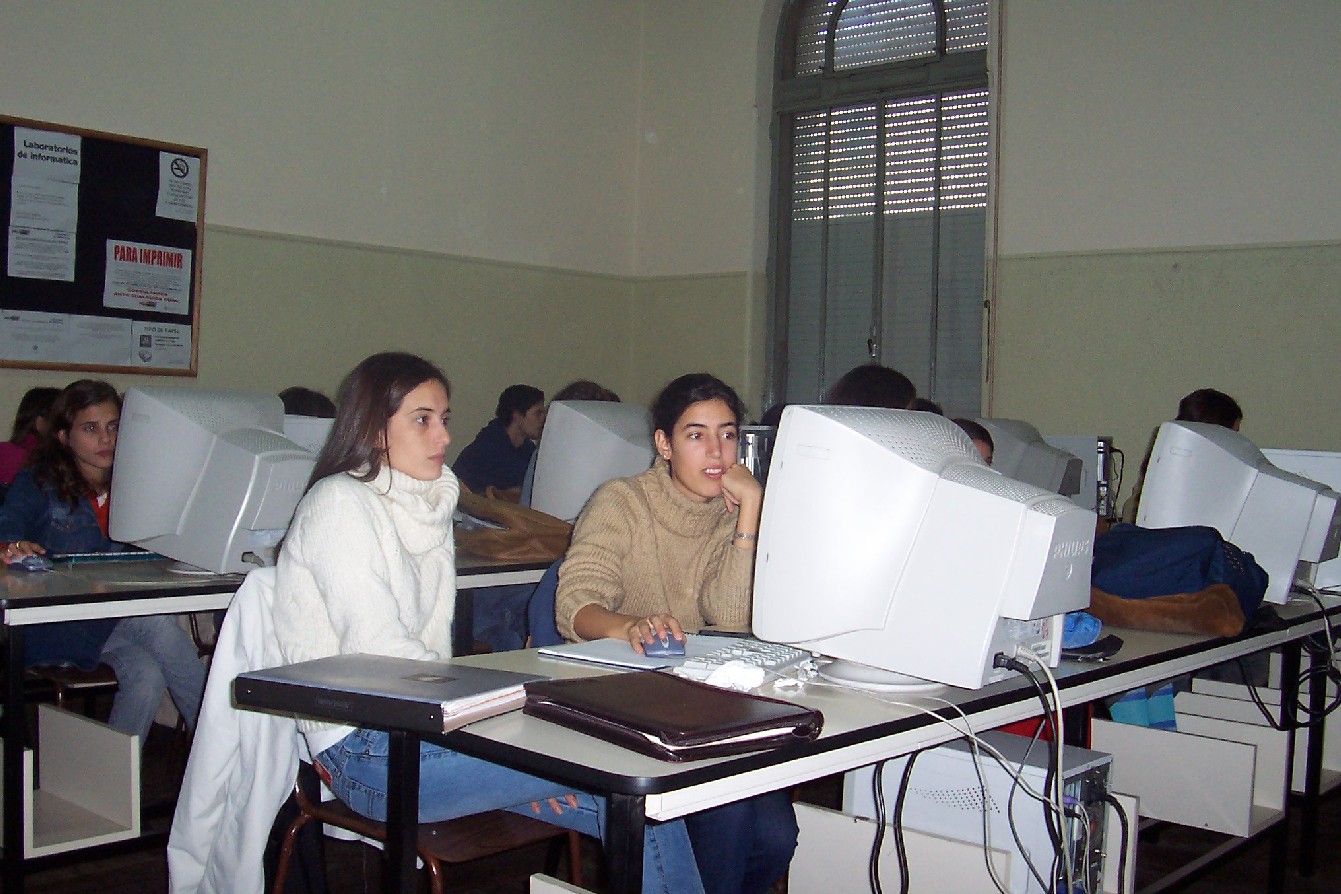
Please be aware that while many people in the cities carry their computers around with them, you should be very careful as thieves target them especially. It is recommended to purchase insurance for your computer before leaving the U.S. that covers theft. Remember to write down the serial number and any other identification because you will have to declare it when filing a police report. Keep in mind that universities typically do not have computers available for student use.
Host families will provide a Wi-Fi connection at their houses. However, most families will not have a printer in the home. Students will have to print at a locutorio in these cases.
Electrical Appliances
Most electrical currents in Argentina and Uruguay are 220 volts/50 cycles, rather than the 110 volts/60 cycles found in the United States. You should consider buying small appliances, like blow dryers, in Argentina or Uruguay. For your larger, U.S.-made or purchased electronics, you will need an adapter plug. A full list of the plug types used in different countries can be found here.
Gifts
If you are planning to live with a host family, you may wish to present them with a token gift. Choose a gift that has some  significance to you and is easy to pack. Consider bringing books with photos of your home or school’s town/state/region, small artisanal crafts, or other items representative of where you are from (e.g., maple syrup, saltwater taffy, etc.).
Don’t forget photos! Your friends will be interested in where you come from: Your family, town, friends, and school. Take pictures that help explain parts of your life in the U.S..
Prescriptions
If you are taking any prescription medication you should bring a full supply with you on the plane together with all the appropriate prescriptions. Students are strongly encouraged to verify with their study abroad advisor or one of the program staff ahead of time if the medications they are taking are available in Argentina or Uruguay. In some instances, medications that are available in the U.S. are not approved for us in other countries.
If you are unable to obtain enough medication for the entire semester, a doctor in your host city may be able to write you a local prescription (prescriptions issued by a U.S. doctor can cannot be used at local pharmacies) and offer you an alternative treatment if your regular medications are not available.
Mailing medicines across international borders is not recommended, as it can be extremely complex and often impossible. Prescription medicines should be left in their original containers, be accompanied by a doctor’s prescription, and be packed in your carry-on bags. Please also note that, in the event that a prescription must be replaced in-country, you should have the GENERIC NAME of your medication on the prescription, in addition to the ‘brand’ name.
If you are under a doctor’s care for a specific condition, you may want to bring a copy of your medical history with you or sign a release form with your doctor in case your medi cal history needs to be sent to a doctor in Argentina or Uruguay.
Toiletries
Toiletries are readily available throughout Argentina and Uruguay. If you are particular about brands, you may want to pack an appropriate supply of the articles you regularly use. Sending toiletries by mail from the U.S. will require a trip to the airport and spending the better part of a day obtaining them from customs, as well as paying an import tax on them, so students are strongly advised against it. Many U.S. brands, while more expensive, can be bought in Argentina or Uruguay, although Latin American brands are of high quality and usually less expensive. If you wear contact lenses, you may want to bring enough solution with you to last your entire stay as it is quite a bit more expensive in Argentina and Uruguay. Sunblock can also be expensive in Argentina and Uruguay and is important to have, especially during the warmer months.
